
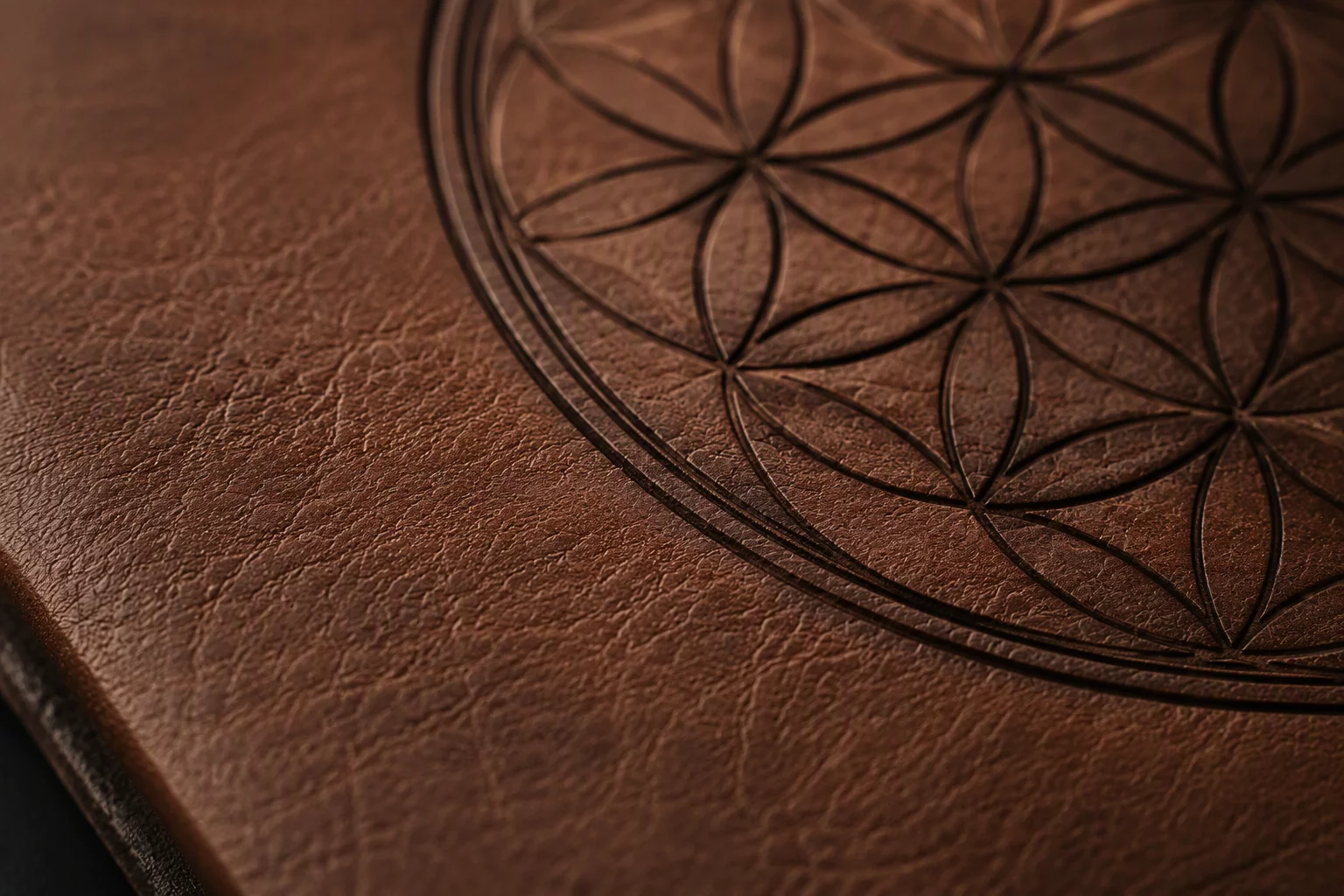
Substrate Dynamics & Thermal Fiber Compression
Processing 2mm leather with a laser cutter introduces organic fiber density challenges unlike uniform acrylic or bonded MDF. Natural hide contains varying collagen densities, oils, and moisture pockets across a single hide section. Vegetable-tanned leather delivers clean carbonization without producing toxic chlorine gases, making it the premier choice for laser marking and cutting operations.
When high-energy laser beams strike the top grain, heat quickly transfers to surrounding fibers, causing localized shrinkage if dwell times run too long. Masking the top surface with low-tack transfer paper protects the sensitive grain from smoke deposits and soot deposition during high-speed raster engraving and deep cutting passes.
Three-Stage Layer Execution Sequence
To maintain geometric accuracy and avoid edge distortion, separate the vector paths into distinct LightBurn layer roles. Never execute outer perimeter cuts before internal holes, stitching slots, and branding marks have reached full completion.
- Layer 01 (Raster Engrave / Surface Tone): High speed (350-450 mm/s), modest power (15-22%), low air assist to prevent blown soot smearing into hot grain pores.
- Layer 02 (Vector Stitch Holes & Score Lines): Fast vector marking at 80-120 mm/s with moderate air to clear pricking iron punch paths cleanly through the flesh side.
- Layer 03 (Outer Perimeter Cut): Single decisive cut pass at 18-25 mm/s, high air assist (1.8 Bar) to clear kerf vapor instantly and minimize edge char.
Executing cuts in multiple rapid low-power passes frequently yields wider charred shoulders on 2mm leather due to cumulative thermal exposure. A single well-calibrated pass paired with vigorous laminar air assist vaporizes the leather cleanly through the flesh side without creating heavy slag.
Char Control, Dimensional Integrity & Finishing
Inspect the cut edge immediately following run completion. A correctly parameterized 2mm leather cut exhibits a dark brown, glossy edge rather than powdery black charcoal. Post-process cleaning requires nothing more than a damp micro-fiber cloth followed by a light application of saddle soap or edge burnishing gum, sealing the fibers for durable craftsmanship.