
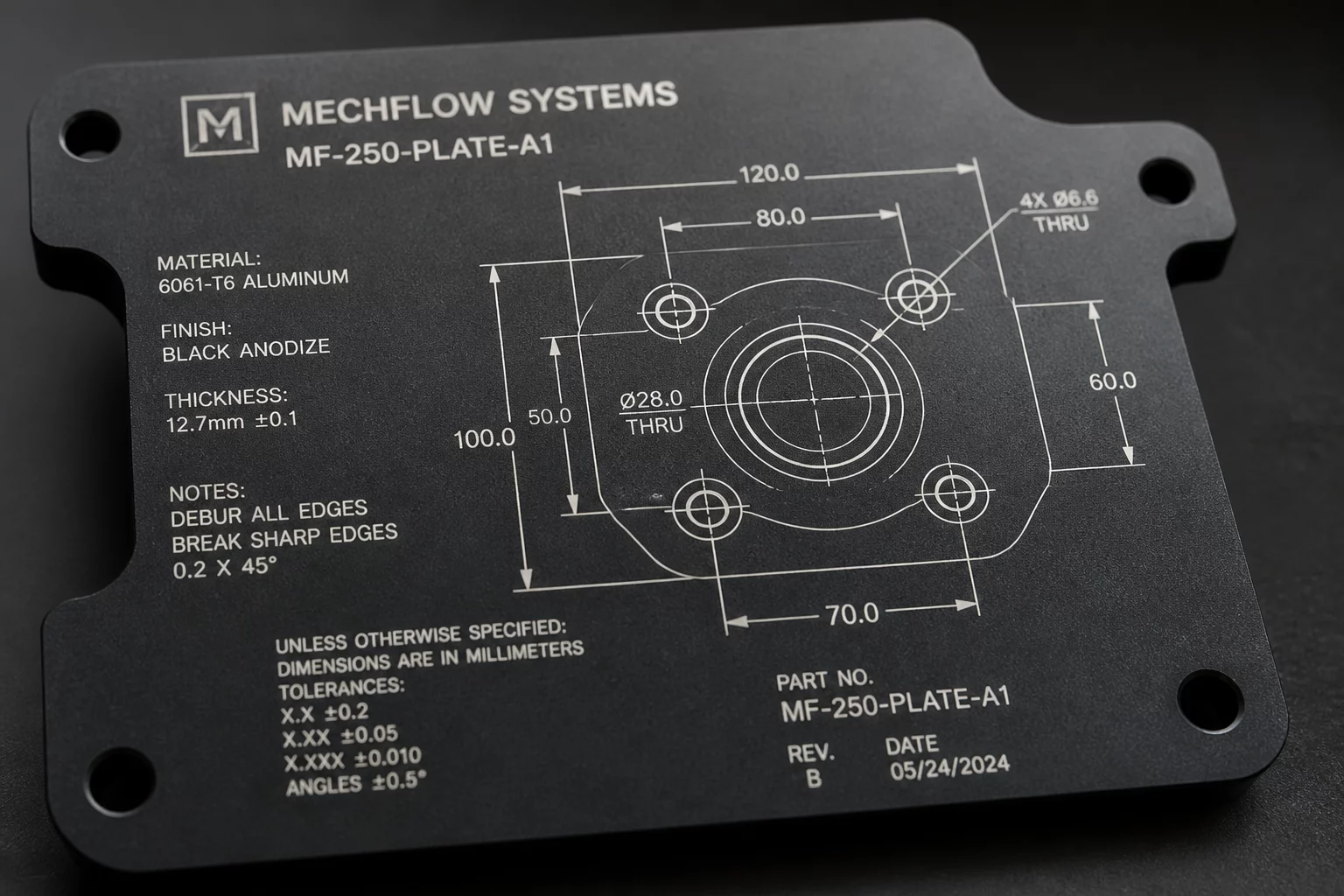
Surface Ablation Physics
Marking anodized aluminum relies on thermal decomposition of the organic or inorganic pigments sealed inside the porous anodic oxide layer (Al2O3). Instead of melting the parent metal, laser energy targets the 5 to 25 micrometer oxide mantle, altering its optical refractive index or vaporizing the coloring agent to expose bright white alumina.
Excessive wattage conducts rapidly through the underlying raw aluminum substrate, generating unwanted heat blooms and melted burrs. Maintaining high scan velocity coupled with a tightened spot size confines thermal input strictly to the anodized film, leaving the mechanical integrity of the component intact.
Power Calibration & Pass Control
Organizing your fill toolpaths requires a careful balance between line interval, pulse frequency, and travel speed. Operating with excessive overlap causes localized reflow and grayish discoloration rather than a crisp, stark white graphic mark.
- High-Speed Raster Fill: Sweep across the anodized surface at 300–600 mm/s with 12–25% power on a 40–80W CO2 or fiber source to bleach pigment without cratering.
- Line Interval Calibration: Lock scan spacing between 0.05 mm and 0.075 mm (350–500 DPI) to prevent raster banding and eliminate over-burn overlaps.
- Vector Perimeter Cleanup: Follow the raster block with a low-power vector trace pass along outer contours to sharpen feathered text corners.
For dark coatings such as black, deep blue, or gunmetal anodization, a single brisk pass generates maximum contrast. Lighter coatings require slightly higher energy density to reveal a clean contrast mark against natural silvery tones.
Verification & Micro-Contrast
Before launching volume manufacturing, inspect test matrices under 20x magnification. A successful mark exhibits sharp edge definitions with a chalk-white finish and zero tactile trenching. Tactile ridge feeling indicates substrate ablation and requires an immediate reduction in laser power or an increase in scanning speed.