
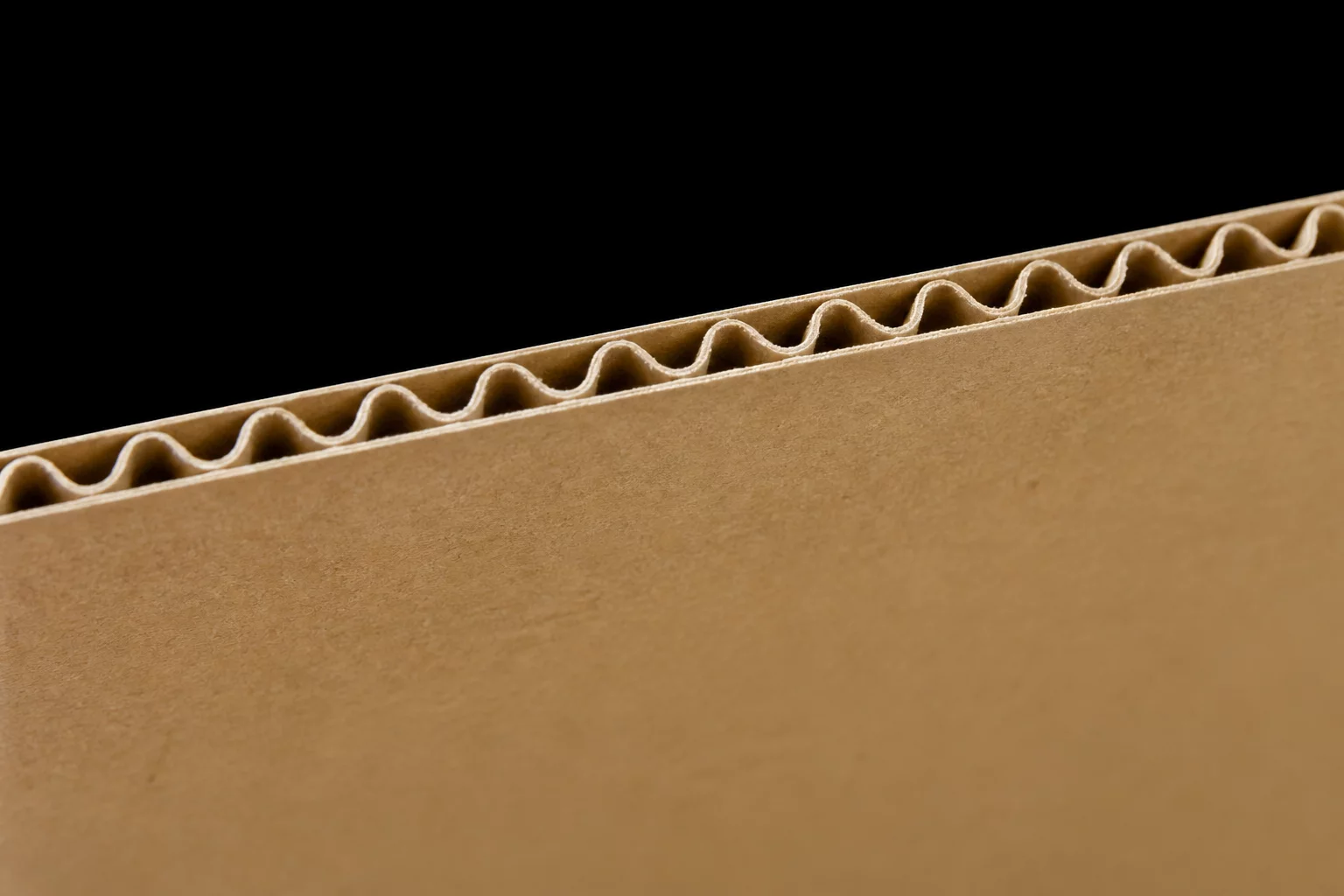
Air Pocket Cavity & Flute Dynamics
Corrugated cardboard presents a unique dual-density challenge in laser workflows. Unlike solid timber or acrylic, corrugated sheets consist of top and bottom paper liners separated by a periodic wave-like fluting medium held together by starch adhesive.
This internal hollow cavity traps ambient air and creates uneven thermal resistance across the sheet. When a laser beam travels across the flutes, it encounters alternating zones of minimal material and localized paper peaks. Without strict toolpath speed control, the concentrated beam rapidly overheats the trapped air pockets, turning the internal flutes into miniature combustion channels that scorch edges and compromise packaging rigidity.
Scoring vs Cutting Sequence Logic
Executing multi-operation packaging designs requires strict separation between surface branding, mechanical fold creasing, and external profile cuts. Running these layers out of order causes workpiece displacement on the honeycomb bed, resulting in misaligned fold creases.
- Layer 01 Surface Engraving: High-speed raster engraving applied first to mark logos and part numbers while sheet vacuum and mechanical hold-down remain fully rigid.
- Layer 02 Vector Crease Scoring: Low-power vector passes calibrated to pierce only the top liner without rupturing the interior flutes or bottom backing layer.
- Layer 03 Through-Cut Perimeters: Final high-velocity perimeter pass that separates the net contour after all internal geometric references have completed.
Maintaining this three-step sequence prevents the drop-down effect where isolated parts sag below the focal plane before receiving their internal crease marks.
Focal Offset & Air Assist Pressure
Air assist pressure on corrugated board must remain gentle. Excessive air pressure blows glowing embers directly through the hollow flutes, spreading flash burns underneath the board. Setting laminar assist pressure between 0.4 and 0.8 Bar gently clears smoke from the optical lens without stoking flame inside the paper matrix. Additionally, shifting focal point 1.0mm above the surface broadens the beam waist slightly, producing smooth, rounded fold creases instead of razor-sharp cuts.